




Maintaining your vehicle shouldn't feel like a guessing game, especially for the system that actually moves you down the road. Here at North Shore Chevrolet of Smithtown in St James, we want to help you keep your car running smoothly for years to come. Knowing exactly when to service your transmission is one of the smartest ways to avoid costly repairs down the line.
- 1. Start with Your Vehicle's Factory Guidelines
- 2. Understand How You Drive Every Day
- 3. Watch for Slipping Gears and Hesitation
- 4. Listen for Unusual Noises Under the Hood
- 5. Check the Color and Smell of Your Fluid
- 6. Learn the Difference Between a Flush and a Change
- 7. Schedule Your Visit for Peace of Mind
- Key takeaways
1. Start with Your Vehicle's Factory Guidelines
Your owner's manual is the ultimate authority on your specific Chevy model. Engineers spent thousands of hours testing your vehicle to determine when the fluid begins to degrade. For many modern automatic transmissions, the recommended service interval stretches up to 90,000 miles under normal operating conditions. Older models or manual gearboxes often require attention much sooner to prevent internal wear.
Reading the Maintenance Schedule
When you open the manual, you will notice two distinct schedules. One is for normal daily driving, while the other covers severe service. Staying on top of these intervals protects your warranty and ensures your gears shift smoothly. Ignoring these guidelines can lead to premature wear on internal clutches and bands, which eventually results in a much larger repair bill. We always recommend checking your manual first before making any assumptions about your vehicle's needs, as different model years can have vastly different requirements. Our service advisors are always happy to help you decode these schedules if you find the manual confusing.
2. Understand How You Drive Every Day
Driving habits play a massive role in how fast your transmission fluid breaks down. If your daily commute involves cruising down the highway with minimal braking, your fluid experiences very little stress. This allows you to wait longer between scheduled maintenance visits. Stop-and-go traffic in busy suburban areas, however, creates excessive heat that degrades the fluid much faster.
Severe Duty Factors
Certain driving behaviors place your vehicle into the 'severe' maintenance category.
- Towing boats or trailers frequently
- Driving in extreme summer heat or freezing winter temperatures
- Navigating hilly or mountainous terrain
Operating under these conditions means you should consider changing your fluid every 45,000 miles. Heat is the number one enemy of automatic transmissions, and severe driving generates a lot of it. Keeping your fluid fresh under these conditions is the best way to prevent the fluid from breaking down and losing its protective qualities prematurely.
3. Watch for Slipping Gears and Hesitation
You do not always have to rely solely on the odometer to know when something is wrong. Your vehicle will often tell you through physical sensations when the transmission needs attention. A healthy transmission should engage immediately and transition between gears without you noticing. If you experience a sudden surge in engine RPMs without an increase in speed, your gears are likely slipping.
Recognizing Shifting Delays
Another common sign of trouble is hesitation when shifting from park to drive or reverse. You might notice a brief pause where the engine revs before the vehicle actually begins to move forward. This hesitation often points to low fluid levels or internal pressure issues. Addressing these early warning signs immediately can save you from a complete transmission failure on the road. Delaying a simple fluid service when these symptoms appear can turn a minor fix into a major overhaul.
4. Listen for Unusual Noises Under the Hood
Strange sounds are rarely a good sign when you are behind the wheel. A failing transmission will often make distinct noises that differ depending on whether you drive an automatic or a manual. Manual transmissions tend to produce a harsh grinding noise when you change gears, which usually indicates worn synchronizers or a dragging clutch. Automatic transmissions are more likely to emit a high-pitched whine or a low buzzing sound.
Identifying Clunks and Whines
Clunking sounds when the vehicle shifts gears are another major red flag. These noises can start out quiet and gradually become louder over several weeks of driving. Ignoring them allows metal-on-metal contact to cause permanent damage to your gears. Bringing your vehicle in for a professional diagnostic check at the first sign of these noises is the safest course of action. Our team can quickly isolate the noise to determine if a simple fluid change will resolve the issue.
5. Check the Color and Smell of Your Fluid
Checking your transmission fluid is a simple way to gauge the health of your system. Healthy automatic transmission fluid has a bright pink or cherry red color and a slightly sweet smell. Over time, heat and friction cause the fluid to darken to a deep brown or black color. It will also lose its transparency as it collects tiny particles of debris from normal wear.
Spotting Burnt Fluid
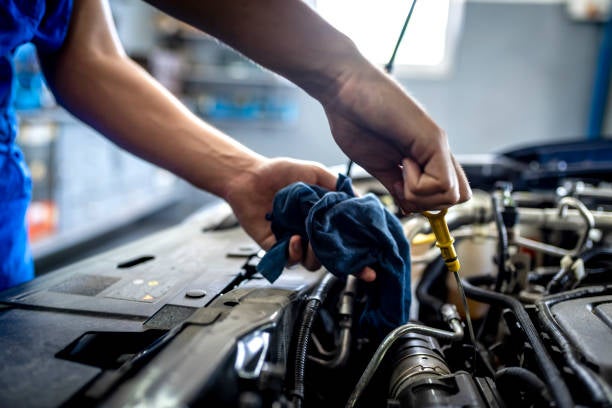
A dark color combined with a sharp, burnt smell indicates that the fluid has overheated. Once the fluid reaches this state, it can no longer lubricate the moving parts effectively or transfer pressure. You might also see small bubbles or foam on the dipstick, which means the fluid level is too high or the system has an air leak. Regular inspections help you detect fluid degradation before it causes serious mechanical damage. Catching dirty fluid early allows you to schedule a service on your own terms rather than waiting for a breakdown.
6. Learn the Difference Between a Flush and a Change
When you bring your vehicle in for service, you might hear technicians discuss a couple of different options. A standard transmission fluid change involves draining the fluid from the pan and replacing the filter. This process only removes about half of the total fluid, as the rest remains trapped inside the torque converter and cooler lines. It is a gentle way to refresh the system without disturbing older components.
Utilizing a Complete Flush
A complete flush uses specialized equipment to push all of the old fluid out of the entire system and replace it with fresh fluid. This method is highly effective at removing sludge and contaminants from every corner of the transmission. Your technician can help you decide which service option fits your vehicle's age and mileage best. Both methods are valuable tools for extending the lifespan of your drivetrain and keeping your shifts crisp and predictable.
7. Schedule Your Visit for Peace of Mind
Taking care of your transmission does not have to be a stressful or inconvenient chore. Our team makes it easy to keep your vehicle in peak condition without disrupting your busy day. You can use our convenient drive-in service lane to get your vehicle checked quickly by factory-trained technicians who know your Chevy inside and out. We believe in complete transparency, which is why we offer no hidden dealer fees or surprises when it comes to your service bill.
Finding Your Next Vehicle
If you decide it is time to transition into something new instead of maintaining your current vehicle, we can assist with that too. We carry a large selection of new, pre-owned and GM Certified vehicles to fit any lifestyle. Keeping your current vehicle running beautifully or helping you find your next one is what we do best every single day. Our team looks forward to helping you stay safe on the roads of St James and beyond.
St James, NY
- Consult your owner's manual for your Chevy's specific service intervals.
- Watch for warning signs like slipping gears, delayed shifts, or dark fluid.
- Severe driving conditions require more frequent transmission fluid changes.
FAQ Common questionsHow do I check my transmission fluid level?Many modern Chevy models feature sealed transmissions that do not have a traditional dipstick under the hood. For these vehicles, a technician must check the fluid level from underneath the car while it is raised on a lift. If your vehicle does have a dipstick, you should check the fluid while the engine is warm and idling in park on a level surface. Can I drive with low transmission fluid?Operating your vehicle with low fluid is highly risky and can lead to severe internal damage within a few miles. Without enough fluid to create pressure and dissipate heat, the internal clutches will begin to slip and burn. If you suspect a leak, it is best to have your vehicle inspected immediately to prevent a complete transmission failure. What is the difference between automatic and manual transmission service?Manual transmissions rely on a heavy gear oil that physically lubricates the gears and syncros, which usually needs to be replaced every 30,000 to 60,000 miles. Automatic systems use a specialized hydraulic fluid that not only lubricates but also transfers power and controls shifting. Because automatic fluid operates under higher pressure and heat, its service often includes replacing an internal filter. Will a transmission flush fix a slipping transmission?Replacing or flushing the fluid is rarely a cure for a transmission that is already slipping significantly. Slipping usually indicates that the internal clutch bands are already worn down or physically damaged. While fresh fluid might temporarily improve performance, a professional inspection is necessary to diagnose the underlying mechanical wear. Does cold weather affect my transmission fluid?Thickening of the fluid is common during freezing winter temperatures, which can cause slightly stiffer or slower shifts when you first start driving. Allowing your engine to warm up for a minute or two before driving helps the fluid circulate and reach its optimal operating temperature. Regular maintenance ensures your fluid retains the proper viscosity to handle extreme temperature drops. |
Let us take care of it Book online in a minute and pick a time that works for you. Or call (631) 406-9158 · 920 Middle Country Rd, St James |